
Registering a .KE domain is simpler than you might think, and thousands of businesses, startups, and bloggers are already claiming their piece of Kenya’s internet.
This guide gets you there in a few minutes, through a trusted, KENIC-accredited registrar like Olitt.
In this guide, you will learn how to register a .KE domain, what it costs, who should register one, when a .KE domain is not the right fit, the requirements involved, the difference between .KE and .CO.KE, common mistakes to avoid, and answers to the questions people ask most.
How Much Does It Cost to Register a .KE Domain?
Prices vary between registrars, so it helps to know the general range before you commit to one.
| Domain Type | Typical Registration | Typical Renewal |
| .co.ke | KES 299 to 1,500 | KES 1,000 to 1,800 |
| Direct .ke | KES 2,500 to 10,000+ | Similar to registration, varies by registrar |
Olitt keeps its pricing simple and predictable.
- .co.ke registration: KES 399
- .co.ke renewal: KES 1,200 a year
When comparing registrars, look past the first-year price and check the renewal rate, the quality of customer support, how much control you get over DNS management, and whether useful extras come included or cost more later.
Let’s now walk through the registration process.
How to Register a .KE Domain (Step-by-Step)
Here is exactly how to register a .KE domain from start to finish.
Step 1: Search for Your Domain
Visit Olitt’s domain search page, enter your preferred domain name, and check its availability instantly.

Step 3: Create or Log Into Your Olitt Account
New customers can sign up in a couple of minutes, while returning customers simply log into their existing account.
Step 4: Enter Your Contact Details
Keep your registrant information accurate, since it confirms your ownership and is what KENIC and your registrar use to reach you about renewals or account issues.
Step 5: Complete Payment
Choose from the available payment methods, and your registration begins as soon as payment is confirmed.
Step 6: Manage Your Domain
Once registered, you can manage DNS records, update nameservers, renew your domain, access WHOIS information, and handle everything else directly from your Olitt dashboard.
Who Should Register a .KE Domain?
A .KE domain fits a wide range of website owners, not just large companies.
- Local businesses gain instant credibility with Kenyan customers.
- Startups signal a genuine local presence from day one.
- Online stores build trust with shoppers who prefer buying local.
- Bloggers stand out with a distinctly Kenyan web address.
- Freelancers look more established with a professional local domain.
- NGOs build trust with donors and the communities they serve.
- Schools get a domain that matches their educational purpose.
- Churches create a recognizable, trustworthy web presence.
- Agencies show clients they know the local market well.
- Personal brands benefit from a short, memorable Kenyan identity.
What Is a .KE Domain?
.KE is Kenya’s country-code top-level domain, managed by the Kenya Network Information Centre, known as KENIC.
KENIC is the official registry, meaning it sets the rules and pricing structure that every accredited registrar, including Olitt, must follow. Only KENIC-accredited registrars can register .ke domains directly, so working with one protects you from unreliable resellers acting as unnecessary middlemen.
KENIC oversees several extensions under the .ke namespace, each designed for a specific type of user.
- .ke is the short, direct option available to anyone.
- .co.ke is the general commercial extension for businesses.
- .or.ke is designed for organizations and non-profits.
- .go.ke is reserved specifically for government bodies.
- .ac.ke is designed for accredited academic institutions.
- .sc.ke is designed for registered schools.
When a .KE Domain Is Not Recommended
A .KE domain is not always the right choice, and it helps to know when another option fits better. Picking the wrong extension for your actual audience can quietly work against your branding, even if the website itself is well built.
Businesses targeting international customers A .com often communicates a global presence more clearly than a country-specific extension.
Established brands already using another domain If your current domain already has traffic, backlinks, and brand recognition, migrating is not always worth the disruption.
Projects without a Kenyan audience Choose the extension that matches where your actual audience lives, not just where your business is registered.
Businesses targeting other countries Consider that country’s own extension instead, such as .co.za for South Africa, .ng or .com.ng for Nigeria, or .co.uk for the United Kingdom.
Temporary projects MVPs, short-term landing pages, and quick campaigns rarely need the commitment of a country-specific domain.
Outside of these cases, .KE remains an excellent choice for any business genuinely serving the Kenyan market.
.KE vs .CO.KE – Which One Should You Register?
Here is how the two most common options compare.
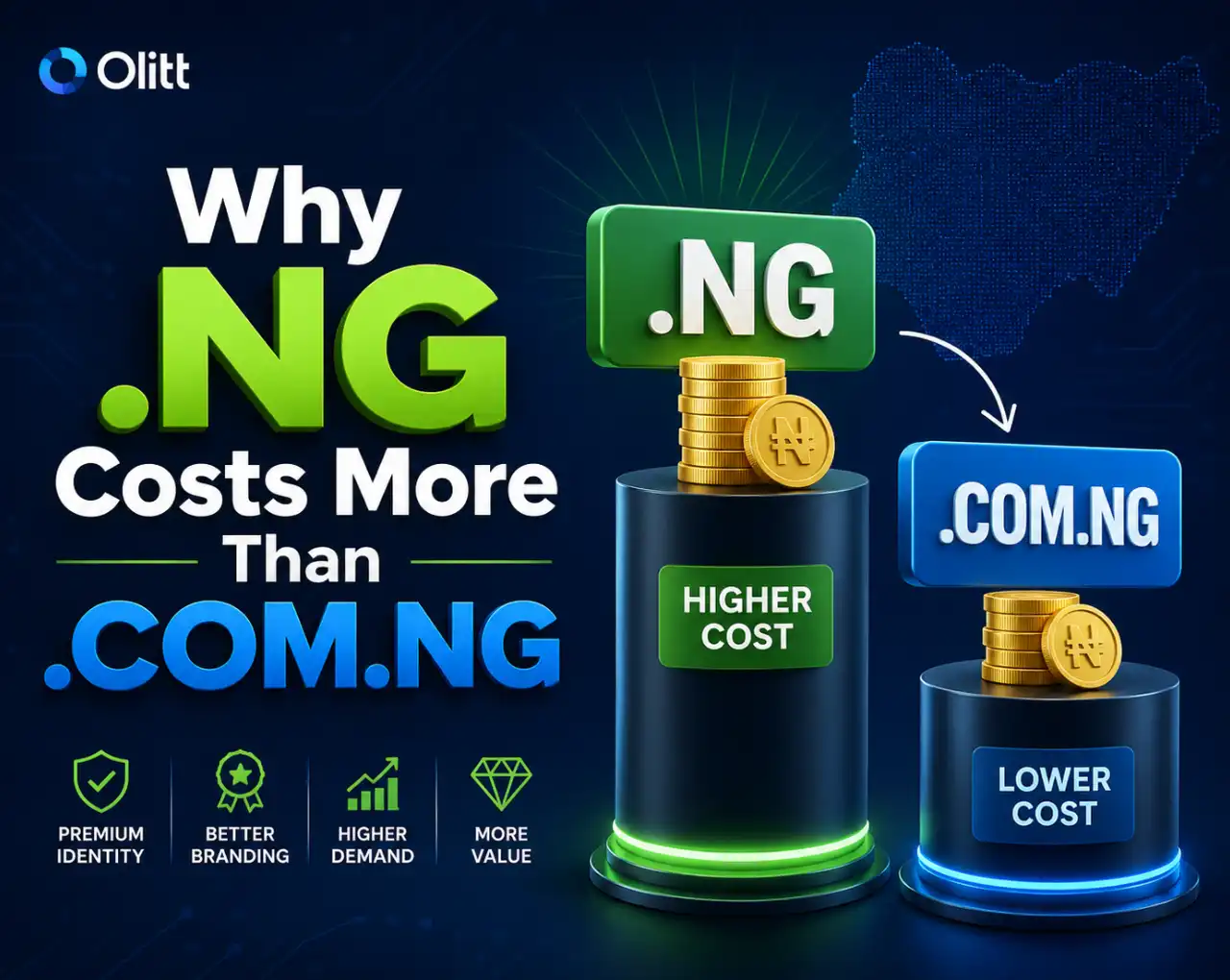
| Factor | .KE | .CO.KE |
| Domain length | Shorter | Longer |
| Registration cost | Higher | Lower |
| Renewal cost | Higher | Lower |
| Branding | Premium, modern | Familiar, traditional |
| Memorability | Easier to recall | Slightly harder due to length |
| Availability | Fewer names remain open | More names still available |
| SEO | No inherent ranking advantage | No inherent ranking advantage |
| Best for | Startups, premium brands | SMEs, local businesses, first websites |
| Professional appearance | Modern and distinctive | Established and dependable |
If budget is tight or you are launching your first website, .co.ke remains a smart, reliable choice. If short, premium branding is the higher priority for your business right now, .ke is worth the extra cost.
Common Mistakes to Avoid When Registering a .KE Domain
A few habits lead to regret later, so watch for these before you register.
- Choosing a domain name that is difficult to spell or say out loud.
- Forgetting to renew before the domain lapses.
- Ignoring trademarks, which can create legal trouble down the line.
- Registering through unreliable, non-accredited resellers.
- Ignoring DNS settings after registration, which can break email or website access.
- Failing to secure similar domain variations, leaving room for competitors or impersonators.
Frequently Asked Questions
How do I register a .KE domain? Search for your domain through an accredited registrar like Olitt, choose your extension, create an account, enter your contact details, and complete payment to activate registration.
How much does it cost to register a .KE domain? A .co.ke domain typically costs between KES 399 and 1,500 for the first year, while a direct .ke domain generally runs from KES 2,500 upward depending on the registrar.
Who can register a .KE domain? Most individuals and businesses can register a standard .ke or .co.ke domain, while extensions like .go.ke, .ac.ke, .or.ke, and .sc.ke require documentation proving eligibility.
What is the difference between .KE and .CO.KE? .KE is the shorter, more premium direct option, while .CO.KE is the standard, more affordable commercial extension most Kenyan businesses use.
Can I transfer my .KE domain to another registrar? Yes, .KE domains can be transferred between accredited registrars, though the exact process and any waiting periods depend on your current registrar’s policies.
Register Your .KE Domain Today
Registering a .KE domain is simple, and choosing the correct extension for your specific situation counts just as much as the registration itself.
Whether you decide to register a .KE domain directly or go with the more affordable .co.ke option, doing it through a trusted, KENIC-accredited registrar like Olitt keeps the process straightforward from day one. Search for your domain on Olitt and secure your preferred name before someone else registers it first.

Sources: KENIC official site, ICANN, Google Search Central