
How to Use Supabase: Building a modern application usually means setting up a database, user authentication, file storage, APIs, and real-time features, all before you write a single line of your actual product.
Managing all of that separately eats up time you would rather spend building. Supabase fixes this by packing everything into one open-source backend platform, so you stop reinventing the same setup for every new project.
Think about the last side project you started. There is a good chance you spent the first few days just wiring up a database and login flow before writing any actual feature code. Supabase exists specifically to skip that part.
This guide covers how to use Supabase from the ground up. You will learn what Supabase actually is, how to deploy it on Olitt, how to access the dashboard, and how to start building on top of it right away.
How to Use Supabase: What It Is and Why Developers Choose It
Before deploying anything, it helps to get a clear picture of what you are actually working with.
What Is Supabase?
Supabase is an open-source Backend-as-a-Service platform built directly on top of PostgreSQL. Many developers describe it as a Firebase alternative, since it covers the same core needs but stays open source and fully self-hostable.
That self-hosting option makes a real difference for teams who want full control over where their data lives. You are never forced onto a single vendor’s cloud, since you can run the exact same stack on your own infrastructure if your needs change later.
Its major services include:
- A full PostgreSQL database.
- Built-in authentication.
- File storage.
- Edge Functions for serverless logic.
- A realtime database for live updates.
- Auto-generated APIs for every table you create.
Why Developers Choose Supabase
A few clear advantages explain why Supabase keeps showing up in new projects.
- It is fully open source, so you are never locked into a single vendor.
- It runs on PostgreSQL, a proven, powerful relational database.
- Authentication comes built in, covering email, OAuth, and more.
- Full SQL support gives you real querying power, not a limited abstraction.
- Every table gets an instant REST API without extra setup.
- Realtime updates let you build live features without a separate service.
- File storage is included, so you do not need a third-party bucket service.
- Scaling gets easier once your data model is already sitting on solid PostgreSQL foundations.
What You Need Before Getting Started
Gather these basics before you deploy anything.
| Requirement | Why You Need It |
| An Olitt account | This is where you will deploy and manage Supabase |
| The Supabase app available on Olitt | This is what you will install through Managed Apps |
| A stable internet connection | Deployment and dashboard access both happen in the browser |
| Basic understanding of databases | Helpful but optional, since the dashboard guides you through the basics |
Once you have these ready, you are set to deploy.
How to Deploy Supabase on Olitt
Here is the full deployment process, from login to your first working project.
- Log in to your Olitt dashboard using your account credentials.
- Open the Managed Applications section, sometimes labeled Kube Apps.
- Search for Supabase in the available apps list.
- Click Install or Deploy to begin setup.
- Choose your instance name, an optional custom domain, and your resource and storage allocation.
- Wait while Olitt automatically provisions the required containers behind the scenes.
- Open your new Supabase dashboard once deployment finishes.
- Create your first project inside the dashboard.
- Set up your PostgreSQL database, either from scratch or using a starter schema.
- Start using Authentication, Storage, the SQL Editor, and your API keys right away.
That entire process usually takes just a few minutes, since Olitt handles the container provisioning for you instead of leaving you to configure servers manually.
Compare that to a manual Supabase self-hosting setup, which typically involves installing Docker, writing a docker-compose file, and configuring networking by hand before you even reach the dashboard. Olitt collapses that entire process into the ten steps above.
Key Features You’ll Use First
A handful of features cover most of what a new project actually needs.
1) PostgreSQL Database
Every Supabase project sits on a real PostgreSQL database, so you get proper tables, relationships, and full SQL support from day one. You can design your schema visually in the dashboard or write raw SQL directly if you prefer more control.
This becomes especially valuable once your application grows past a simple prototype. Foreign keys, joins, and constraints keep your data consistent in a way that simpler databases often struggle to match at scale.
2) Authentication
Supabase Authentication covers the login methods most applications need.
- Email and password sign-in.
- OAuth login through providers like Google and GitHub.
- Magic links for passwordless sign-in.
Setting this up early, even before you need every method, saves you from retrofitting login flows into a half-built application later.
3) Storage
Supabase Storage handles file uploads without needing a separate service.
- Images for user avatars or product photos.
- Videos for media-heavy applications.
- Documents for files users upload or download.
REST API
Every table you create automatically gets a REST API, generated instantly without writing backend code yourself.
Realtime
Supabase Realtime pushes database changes to connected clients the moment they happen, which is ideal for:
- Live chat features.
- Instant notifications.
- Collaborative apps where multiple users edit the same data.
Edge Functions
Edge Functions let you run serverless backend logic close to your users, without managing your own server infrastructure.
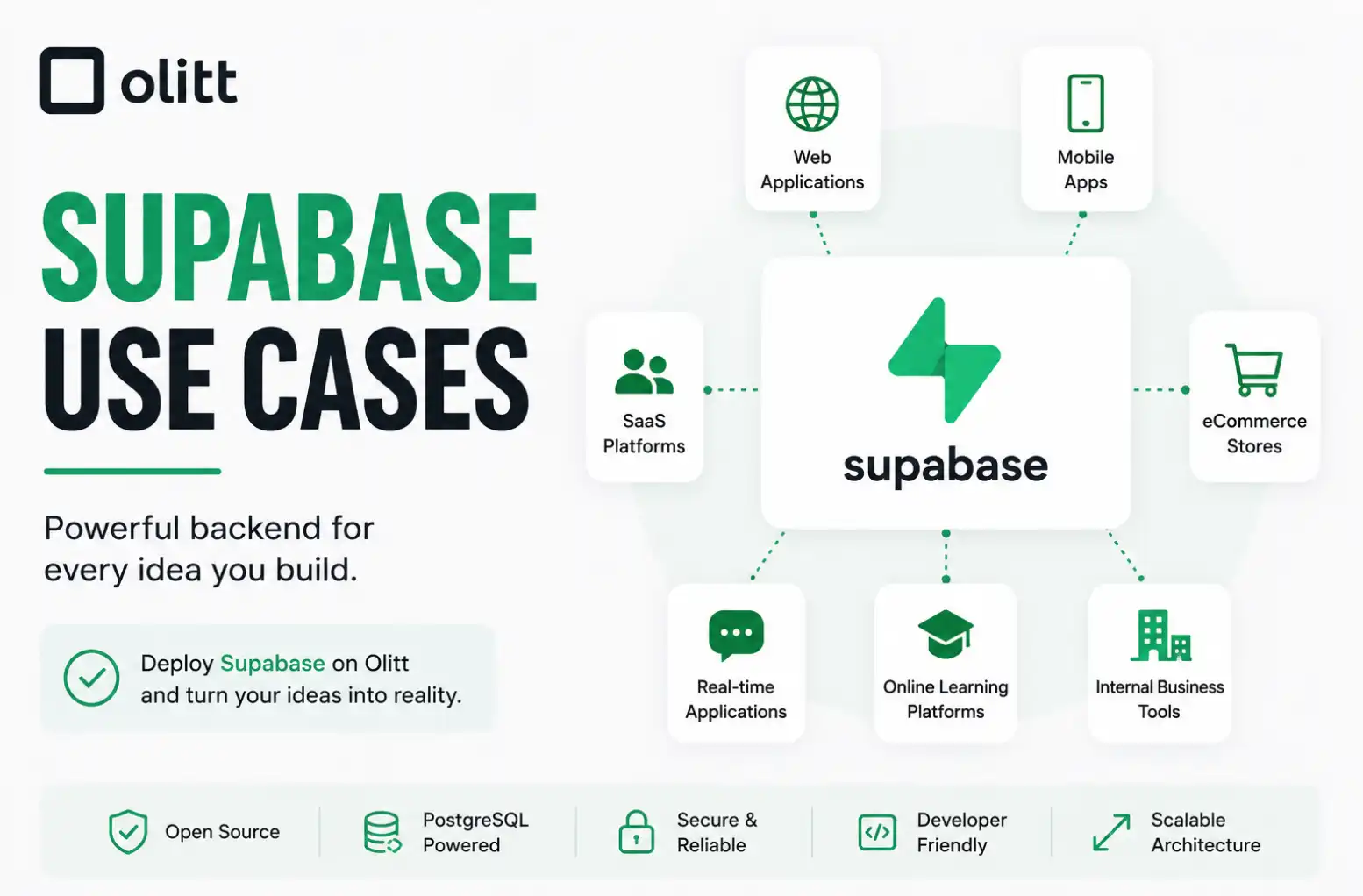
Common Supabase Use Cases
Supabase fits a wide range of project types, not just one narrow niche.
- SaaS applications that need a full backend without a large engineering team.
- Mobile apps that rely on authentication and realtime sync.
- AI applications that need a fast, structured database layer.
- E-commerce stores managing products, orders, and customers.
- CRM systems tracking leads and customer relationships.
- Internal dashboards built quickly for a small team.
- Blogging platforms that need structured content storage.
- Inventory systems tracking stock across locations.
- Customer portals giving users access to their own data securely.
- Startup MVPs that need to launch fast without over-engineering the backend.
The common thread across all of these is speed. Each one benefits from skipping weeks of backend setup and getting straight to the features that actually differentiate the product.
Supabase vs Firebase: When Should You Choose Supabase?
If you are weighing Supabase against Firebase, the decision usually comes down to a few clear factors.
Choose Supabase if you want a relational SQL database, full open-source control, and the option to self-host on your own infrastructure. Choose Firebase if you specifically want a NoSQL document database or you are already deeply invested in Google’s ecosystem.
For most new projects that expect to grow in complexity, the relational structure and SQL power behind Supabase tend to hold up better over time than a document-based alternative.
Pricing is another factor worth weighing. Supabase’s generous free tier and predictable paid pricing often work out cheaper than Firebase once a project scales past its initial free usage limits, though your actual costs depend on your specific usage pattern.
Why Deploy Supabase on Olitt?
Deploying Supabase yourself usually means configuring Docker, managing containers, and handling your own server maintenance. Olitt removes that layer of complexity entirely.
- Simple deployment through a few clicks instead of command-line setup.
- Managed infrastructure, so you are not responsible for server upkeep.
- Reliable hosting built to keep your backend available.
- Easy scaling as your project grows.
- A centralized dashboard for managing your deployed apps.
- No complicated server setup required before you can start building.
- Fast provisioning, so you are working inside Supabase within minutes.
- A beginner-friendly experience overall, even if you have never deployed a backend before.
If you are also exploring other tools, Olitt hosts other Managed Apps like n8n for workflow automation and Odoo for business management, all through the same dashboard. Deploying multiple tools this way means you manage one billing relationship and one login instead of juggling accounts across several different providers.
Tips for Beginners
A few habits make the first few weeks with Supabase much smoother.
- Start with one project instead of spreading effort across several at once.
- Learn basic PostgreSQL concepts early, since they underpin everything else.
- Enable authentication early, even before you need every login method.
- Organize your database tables thoughtfully from the start.
- Back up your data on a regular schedule.
- Use Row Level Security to control exactly who can access what.
- Store secrets and API keys securely, never directly inside your codebase.
Common Mistakes to Avoid
Watch out for these early on, since they cause most beginner headaches.
- Forgetting to set Row Level Security policies, leaving data exposed.
- Using public API keys incorrectly in places that should stay private.
- Poor database design that creates problems as the project grows.
- Ignoring backups until something goes wrong.
- Exposing sensitive credentials inside client-side code.
- Overcomplicating your schema too early, before you know what you actually need.
Most of these mistakes share a common thread: they show up as security or performance problems weeks after launch, once real users are already depending on the app. Catching them early, while your schema is still small, is far easier than untangling them later.
Frequently Asked Questions
What is Supabase used for?
Supabase is used to build backends for web and mobile apps, covering databases, authentication, storage, APIs, and realtime features in one platform.
Is Supabase free?
Yes, Supabase offers a free tier suitable for small projects and testing, along with paid plans for larger projects that need more resources, and it is fully open source if you choose to self-host instead.
Is Supabase better than Firebase?
Neither is universally better. Supabase suits projects that want a relational SQL database and open-source flexibility, while Firebase suits projects built around Google’s NoSQL ecosystem.
Can I self-host Supabase?
Yes, and deploying it through Olitt is one of the simplest ways to self-host without managing servers manually.
Does Supabase use PostgreSQL?
Yes, PostgreSQL is the core database behind every Supabase project.
Start Building with Supabase Today
Supabase gives developers a complete backend, covering databases, authentication, storage, APIs, and real-time features, all inside a single platform instead of five disconnected tools.
Now that you know how to use Supabase from setup to your first working project, the only step left is deploying it. Deploying it through Olitt simplifies the entire setup, so you can focus on building your application instead of managing infrastructure.
Ready to get started?Deploy Supabase on Olitt and start building your next project today. If you need a frontend to go with it, launch one with the Olitt AI Website Builder.
Sources: Supabase documentation, PostgreSQL documentation, PostgreSQL Row Level Security guide